
Introduction
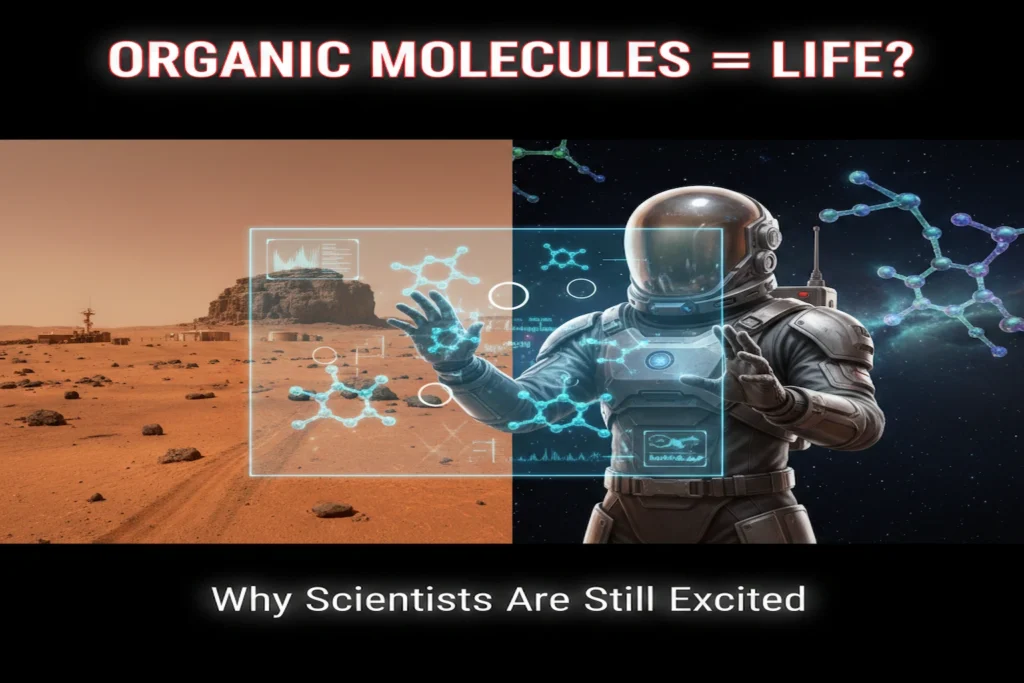
When headlines say scientists have found organic molecules on Mars, it sounds like a turning point. To many people, it feels like the final step before announcing life beyond Earth. Carbon-based chemistry has always been tied to living things on our planet, so the excitement is easy to understand.
But the story is not that simple.
Organic molecules don’t automatically point to biology. They can form through heat, pressure, radiation, and even meteor impacts. Mars, with its harsh surface and long geological history, is especially good at preserving chemical traces that look important but don’t tell the full story on their own.
That’s exactly why this discovery has scientists talking from two sides at once. Cautious, because chemistry can be misleading. Excited, because these molecules survived billions of years in Martian rock. They hint that ancient Mars may have had the right ingredients for life, even if life itself remains unproven.
Understanding that difference is where the real story begins.
What Are Organic Molecules and Why They Matter on Mars
Organic molecules are carbon-based molecules. That is the simplest definition. They do not need life to exist.
On Earth, living things make many organic molecules. But organic compounds found on Mars are different. They can form without biology.
Heat can create them. Pressure can reshape them. Radiation can change simple chemistry into complex chains. This is called Martian organic chemistry.
Mars has the right conditions for this process. Volcanic activity existed long ago. Meteorites delivered carbon-rich material. Water once flowed on the surface. All of this supports the presence of organic molecules on Mars.
This is why scientists care. Not because these molecules prove life. But because they show chemical potential.
Think of organic molecules as ingredients. Ingredients are not a finished meal. They only tell you what could happen.
Finding carbon-based molecules on Mars means the planet was not chemically dead. It had energy. It had movement. It had reactions happening over long periods of time.
That matters for one reason. Habitability.
Organic compounds found on Mars suggest that ancient Mars may have supported environments where life might have emerged. Not survived. Not evolved. Just started.
This is why scientists keep searching. The chemistry is promising. The conclusion is still open.
What Organic Molecules Have Actually Been Found on Mars?
The mars organic molecules discovery did not happen overnight. It came in pieces. Over years. Across different missions.
Scientists first confirmed simple organics. Small chains. Basic carbon structures. Later, something more surprising appeared.
Longer chains.
These were not single carbon atoms. They were linked. Stable. Ancient.
Some samples contained what researchers now call the mars longest organic molecules ever detected. These molecules were trapped inside rock. Protected from radiation. Preserved for billions of years.
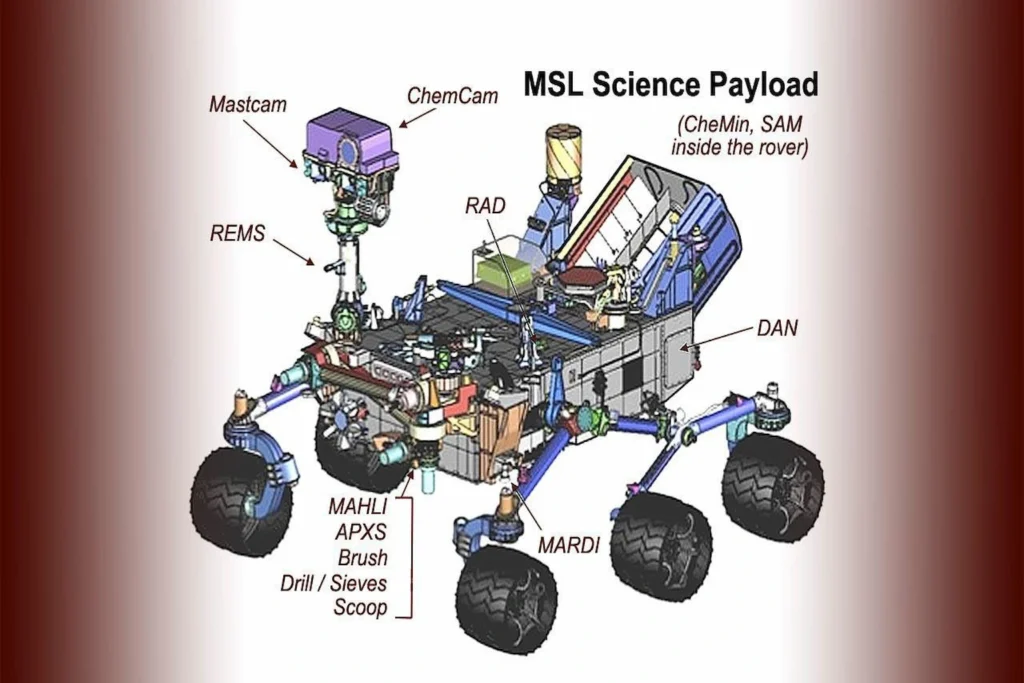
The discoveries came from data analyzed by NASA using rover-based laboratories. One key system was Sample Analysis at Mars. It heats rock samples. Releases gases. Then reads their chemical signatures.
Another major step came from Mars Organic Molecule Analyzer. This instrument is designed to detect complex organic molecules on Mars. Even fragile ones. Even altered ones.
What makes this discovery important is age. These are ancient Martian organics. They date back to a time when Mars had water. And a thicker atmosphere.
But here is the limit. No cells were found. No DNA. No clear biological patterns.
What scientists have are organic compounds found on Mars that confirm chemistry. Not life.
Still, the length of these molecules matters. Longer chains suggest stability. They suggest repeated chemical reactions. They suggest an environment that allowed complexity to build.
That alone changed the conversation. Not from “Is there life?” But from “What kind of chemistry once existed here?”
Latest Instruments Used in Detecting Organic Molecules on Mars
Detecting chemistry on Mars is not simple. The environment destroys evidence quickly. So instruments must work fast. And precisely.
One of the most important systems is Sample Analysis at Mars. It is carried by the Curiosity rover. SAM heats rock samples. Releases trapped gases. Then reads their chemical makeup.
This method helps identify organic molecules on Mars that are hidden inside ancient rock. Not exposed to radiation. Not altered by surface conditions.
Another advanced tool is the Mars Organic Molecule Analyzer. This instrument was designed to go deeper. And detect fragile compounds.
MOMA can separate molecules. Measure mass. And reduce contamination risks. This improves confidence in results.
Both instruments are operated by teams from NASA and the European Space Agency. Their focus is accuracy. Not headlines.
These tools do not look for life directly. They look for chemistry. Patterns. Possibilities.
And that limitation matters.
Because instruments can confirm molecules. But interpretation still belongs to science.
Why Organic Molecules on Mars Don’t Prove Life
This is where confusion begins. And expectations rise too fast.
Finding organic molecules don’t prove life. Not on Mars. Not anywhere.
Organic molecules can form without biology. This is known as non-biological organic molecules. They are common in space.
Meteorites carry them. Comets contain them. Interstellar dust is full of them.
Mars has been exposed to all of this.
Geology also plays a role. Volcanic heat can trigger reactions. Minerals act as catalysts. Over time, chemistry builds complexity.
This process is called abiotic organic formation. It happens without cells. Without metabolism. Without reproduction.
Mars is especially tricky. Radiation constantly alters molecules. Surface chemistry gets distorted. Original signatures fade.
This makes geological processes on Mars hard to separate from biology. A molecule may look promising. But its origin stays unclear.
Another factor is delivery. Some organics likely arrived from space. This is known as meteorite-delivered organics. They did not form on Mars at all.
That matters.
Because context is missing. There are no repeating biological patterns. No cellular structures. No chemical imbalance that screams life.
What scientists see is chemistry that makes sense. But not biology that stands apart.
This is why caution dominates the discussion. The molecules are real. The excitement is real. The proof of life is not.
And that distinction changes everything.
The Biggest Challenge: Proving a Biological Origin
Finding molecules is one thing. Proving life is another.
The hardest part is origin.
Scientists look for biological origin of organic molecules. That is the real goal. And it is difficult.
Life leaves patterns. Chemistry does not always do that.
On Mars, those patterns are incomplete. Broken. Or missing.
One key clue is biosignatures on Mars. These are signals that point strongly to biology. Not just chemistry.
So far, none are clear enough.
Another problem is carbon behavior. Living systems prefer certain forms of carbon. This creates distinct ratios. On Mars, those isotopic ratios of carbon on Mars overlap with non-living processes.
That overlap creates doubt.
Time also works against certainty. Radiation alters molecules. Heat reshapes structures. Billions of years erase detail.
This leads to false positives in astrobiology. Chemistry that looks biological. But is not.
Contamination is another risk. Earth-based instruments carry traces. Extreme care is required. Even then, questions remain.
Without context, molecules stay ambiguous. No ecosystem. No repeating biological signal. No clear chemical imbalance.
This is why scientists hesitate. Not because the data is weak. But because the standard of proof is high.
Extraordinary claims need extraordinary evidence. Mars has offered clues. Not conclusions.
And until that changes, the debate stays open.
So Why Scientists Are Still Excited
Caution does not mean disappointment. Not in science.
Despite the limits, scientists excited about Mars organics is a real thing. And it makes sense.
The biggest reason is survival. These molecules lasted. For billions of years.
Mars is harsh. Radiation is constant. The surface is exposed. Yet the chemistry remained.
That alone matters.
The presence of potential past life on Mars is not proven. But the planet clearly supported habitability of ancient Mars. Water existed. Energy existed. Carbon chemistry existed.
That combination is rare.
Another reason is direction. These discoveries guide future exploration. They help scientists choose where to look next. And where not to waste time.
This shapes future Mars missions life search strategies. Landing sites are selected with care. Ancient environments get priority.
Agencies are paying attention. Including the European Space Agency. Their missions focus on deeper sampling. Below the radiation-damaged surface.
There is also progress in technology. New instruments are more sensitive. Cleaner. More precise.
Each discovery narrows uncertainty. Each result removes one wrong path.
Scientists are excited because Mars keeps answering questions. Even when the answer is “not yet.”
That is how breakthroughs happen. Not with one result. But with steady clarity.
Mars is no longer a dead planet. It is a chemical record. And that record is still being read.
What This Discovery Means for the Future and Why It Matters Beyond Mars
The discovery does not end the search. It sharpens it.
Future missions will go deeper. Below the surface. Away from radiation.
That is where answers last longer.
The focus now is future Mars life detection. Not surface dust. But protected rock. Ancient layers.
This is why sample return matters. Bringing material to Earth allows advanced organic analysis on Mars samples. Lab conditions are controlled. Precision improves. False signals drop.
This approach supports the Mars sample return mission strategy. It is slow. Expensive. But necessary.
Rovers can only do so much. Earth laboratories can do more.
What is learned on Mars also travels outward. The same methods apply elsewhere. Icy moons. Hidden oceans. Distant worlds.
This connects directly to the search for life beyond Earth. Mars becomes a testing ground. A reference point. A lesson in patience.
Organic molecules alone are not enough. Context matters. Environment matters. History matters.
That realization reshapes astrobiology.
It lowers assumptions. It raises standards. It improves questions.
And that may be the most important result so far.
The presence of organic molecules on Mars does not prove life existed there. But it proves something else. Mars was once chemically active. Capable. Interesting.
Science does not move by headlines. It moves by clarity.
Mars offered chemistry. Scientists responded with caution. And excitement followed anyway.
Because sometimes the most powerful discovery is not an answer. It is knowing exactly what to ask next.
FAQs
Yes. Scientists confirmed the presence of organic molecules on Mars in multiple rock samples. These molecules were detected in ancient Martian sediments, not on the surface. The discovery shows complex carbon chemistry, but it does not confirm life.
Researchers discovered ancient organic compounds preserved in Martian rock. These molecules survived intense radiation for billions of years. The finding proved Mars once had the chemical conditions needed for habitability, even though life itself remains unproven.
The largest findings include long-chain organic molecules containing multiple carbon atoms. These are the mars longest organic molecules detected so far. Their size matters because longer chains are harder to preserve and suggest stable chemical environments in Mars’ past.
Mars contains carbon-based organic compounds, including simple hydrocarbons and more complex molecular chains. These materials can form through geological processes, meteorite delivery, or ancient water-driven chemistry. None of the detected materials are confirmed biological remains.
No. Organic molecules don’t prove life. They are essential ingredients, not evidence. Many non-living processes can create the same chemistry. Scientists require additional biosignatures before linking organics directly to past life.
Scientists are excited because these molecules show that ancient Mars was chemically active and potentially habitable. The survival of organics over billions of years increases confidence that Mars once had stable environments worth deeper exploration.
They were detected using onboard rover laboratories operated by NASA. These instruments heat rock samples and analyze released gases to identify chemical signatures. This method helps detect organics protected inside rocks.
Yes. Abiotic organic formation is common in space. Heat, minerals, radiation, and meteor impacts can all produce organic molecules. This is why scientists separate chemical detection from biological interpretation.
Mars lacks context. Radiation damages molecules. Geological processes blur signatures. Isotopic patterns overlap between biology and chemistry. Without clear biosignatures, scientists cannot confirm a biological origin with confidence.
Yes. Future missions focus on subsurface sampling and sample return. Bringing Martian material to Earth allows advanced testing under controlled conditions. This greatly improves the chances of identifying true biological signals, if they exist.