Getting the classic country rock guitar tone is not about copying one pedalboard or buying the most expensive guitar. It is about understanding the sound first. Country rock sits between raw rock energy and traditional country clarity. The country rock guitar sound feels clean, warm, and slightly gritty. It never feels heavy. It never feels sterile. Once you understand that balance, the gear choices become much easier.
This guide breaks it down step by step. Guitars. Pedals. Amps. Technique. Listening habits. Everything that actually shapes a classic country rock sound.
What Defines the Classic Country Rock Guitar Tone?
The classic country rock guitar tone comes from restraint. It is not drenched in distortion. It is not overly polished.
At its core, the country rock guitar sound is:
- Clean with a touch of breakup
- Warm but articulate
- Dynamic and touch-sensitive
- Rooted in vintage recordings
Most players used simple setups. A solid electric guitar. A tube amplifier. A few subtle effects. The goal was clarity. Every note had to breathe.
This tone grew during the early evolution of country rock. Rock bands leaned into country influences. Country players borrowed rock attitude. The guitar became the bridge.
Guitars That Nail the Country Rock Guitar Sound
Your guitar choice matters more than most pedals. The wood, pickups, and scale length shape the base tone before anything else.
Best Electric Guitar Types for Country Rock
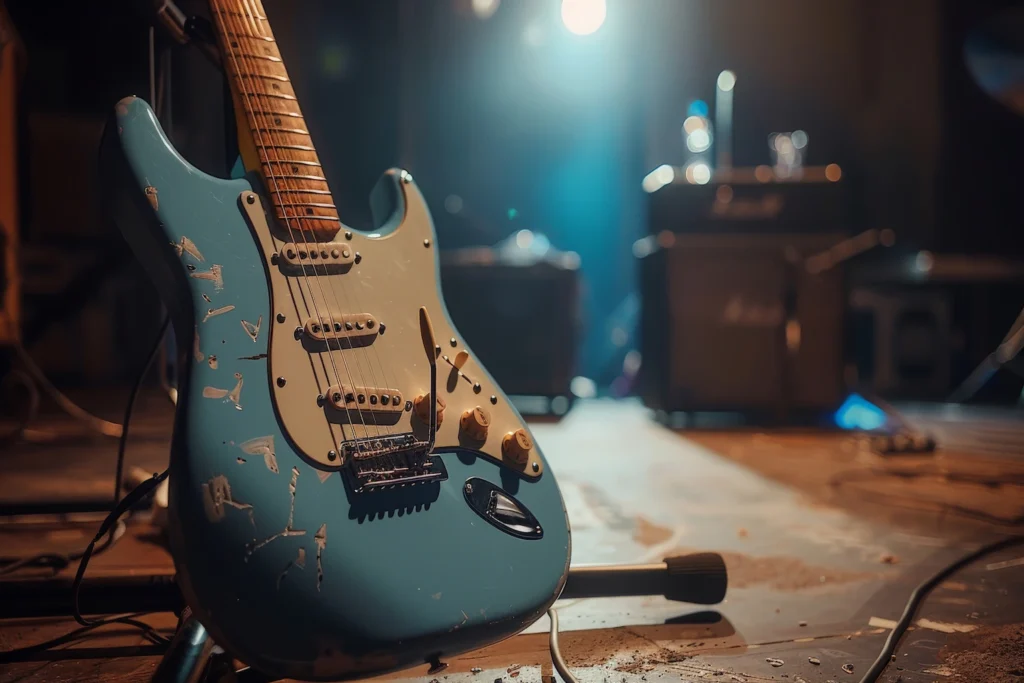
The most reliable choice for a country rock electric guitar is a single-coil based instrument.
Telecaster-style guitars are iconic for a reason. They deliver snap. They deliver clarity. They cut through mixes without sounding harsh. This makes them ideal for a vintage country rock tone.
Strat-style guitars also work well. Especially when used on the bridge or middle pickup. They sound slightly rounder but still retain sparkle.
Semi-hollow electric guitars bring warmth. They soften sharp edges. They work beautifully for players who lean more toward the rock side of the genre.
If you are asking for the best guitar for country rock, focus less on brand names. Focus on pickups and feel.
Pickups and Their Role in Country Rock Guitar Tone
Pickups shape everything.
Single-coil pickups are the backbone of the classic country rock guitar tone. They deliver articulation. They respond to picking dynamics. They clean up beautifully when you roll back the volume.
Humbuckers can work. Especially low-output or vintage-voiced ones. They add thickness but can reduce bite if pushed too hard.
For a true vintage country rock tone, clarity always wins over power.
Essential Country Rock Guitar Pedals and Effects
Effects in country rock are subtle. If people notice your pedals, you are using too much.
Compression – The Backbone of the Tone
A compression pedal is almost mandatory for a country rock guitar sound.
Compression evens out volume. It adds sustain. It keeps clean tones full.
Used lightly, it makes your playing feel polished without sounding processed. This is why compression appears on nearly every list of top-rated country rock guitar pedals and effects.
Overdrive – Warm, Not Aggressive
Overdrive in country rock should feel natural.
A mild overdrive pedal helps push a tube amp. It adds grit. It never overwhelms.
Think edge. Not crunch.
This approach defines the classic country rock sound. Slight breakup that responds to how hard you pick.
Delay and Reverb – Space Without Mud
Slapback delay is a secret weapon. One short repeat. Very low mix. It adds depth without distraction.
Spring reverb brings air. It keeps the tone alive.
These effects support the country rock effects pedals category, but they should always stay in the background.
Amp Settings for Authentic Country Rock Guitar Tone
Your amplifier finishes the tone.
A tube amplifier with good clean headroom works best. Set it just before breakup.
EQ matters.
- Bass stays controlled
- Mids remain present
- Treble stays clear but never sharp
Avoid extreme scooping. Country rock lives in the midrange.
This setup gives you that familiar vintage amp sound heard on classic records.
Technique Matters More Than Gear
Gear helps. Technique defines the sound.
The classic country rock guitar tone depends heavily on how you play.
Use dynamic picking. Pick softer for clean tones. Dig in for grit.
Many players use hybrid picking. Pick plus fingers. It adds snap and control.
Muted strums. Controlled bends. Precise vibrato. These small choices shape the country rock guitar tone settings more than any pedal.
Training Your Ear for the Classic Country Rock Sound
Tone starts with listening.
Streaming is convenient. Vinyl teaches nuance.
Listening to original pressings helps you hear how the country rock guitar sound was captured. Less processing. More room sound. More honesty.
Modern streaming playlists are still valuable. They help you compare eras. Classic versus modern country rock guitar tone.
Your ears guide your hands. Not the other way around.
Beginner Setup vs Enthusiast Setup
A beginner setup focuses on simplicity.
One country rock electric guitar. One compressor. One mild overdrive. A clean amp.
An enthusiast setup refines details.
Pickup choices. Pedal stacking. Amp EQ shaping. Touch sensitivity.
Both paths lead to the same goal. A natural classic country rock guitar tone that feels alive.
FAQs
Not many. A compressor and mild overdrive are usually enough. Most of the classic country rock sound comes from clean tones.
Very little. Set the amp just before breakup. Let picking strength control the grit.
It sits in the middle. Cleaner than rock. Grittier than traditional country. Balance is key.
Absolutely. Picking dynamics, muted strums, and controlled bends shape the tone more than pedals.
Yes. Vinyl recordings reveal natural dynamics and space that help train your ear for authentic tone.
Yes. Country rock is one of the most beginner-friendly styles if you focus on clean playing and touch.
Very much. Modern artists still use the same core country rock guitar tone with updated gear.